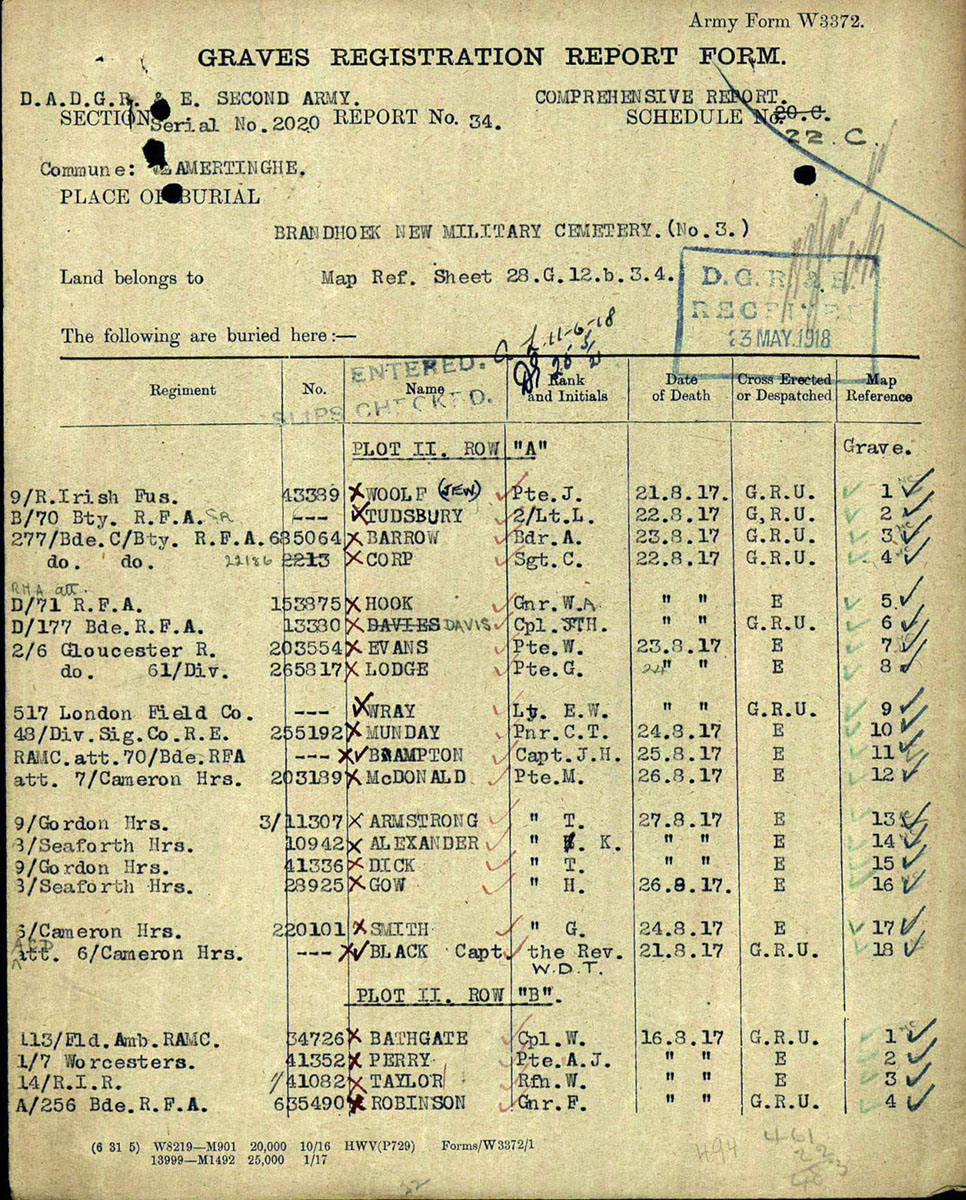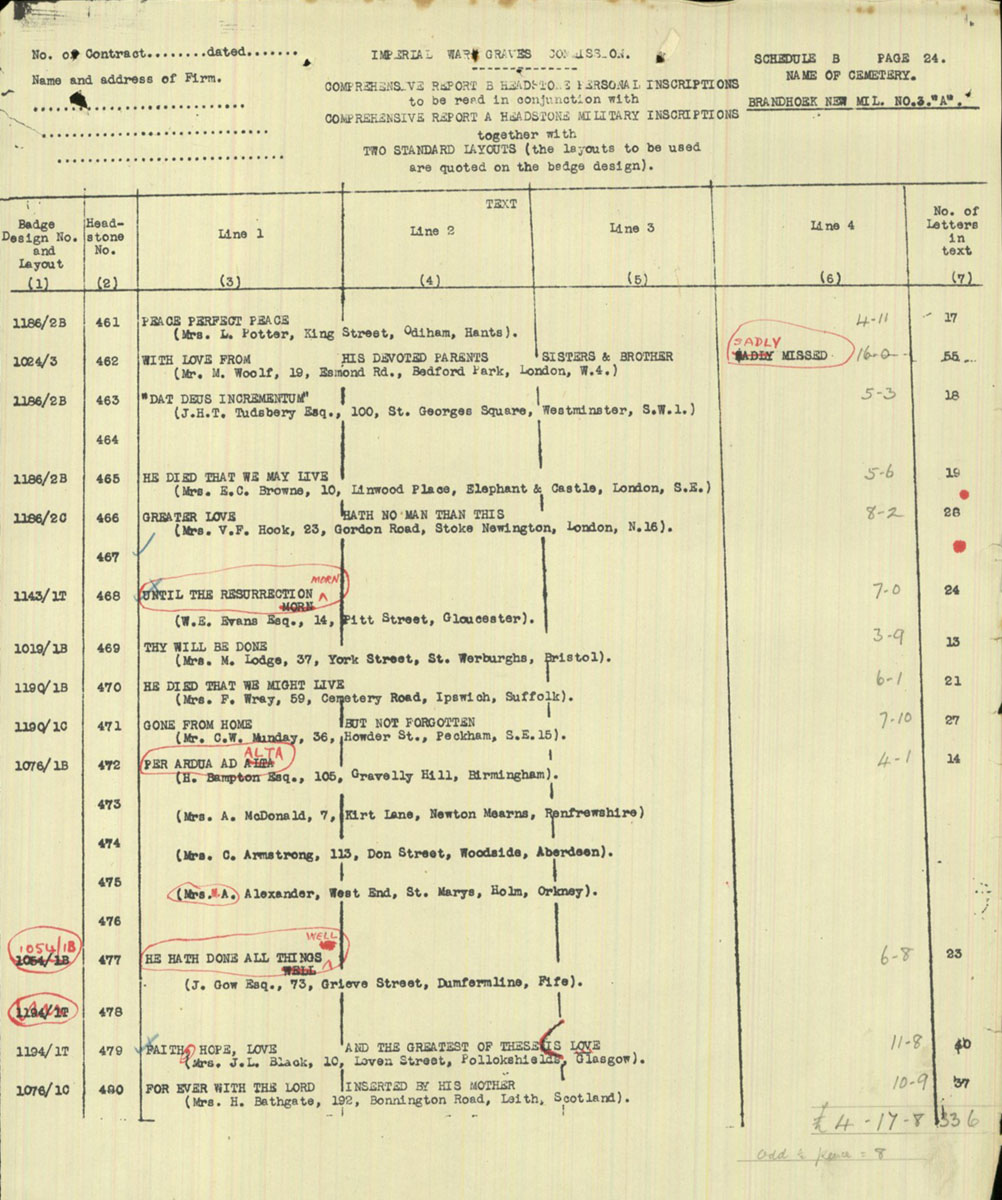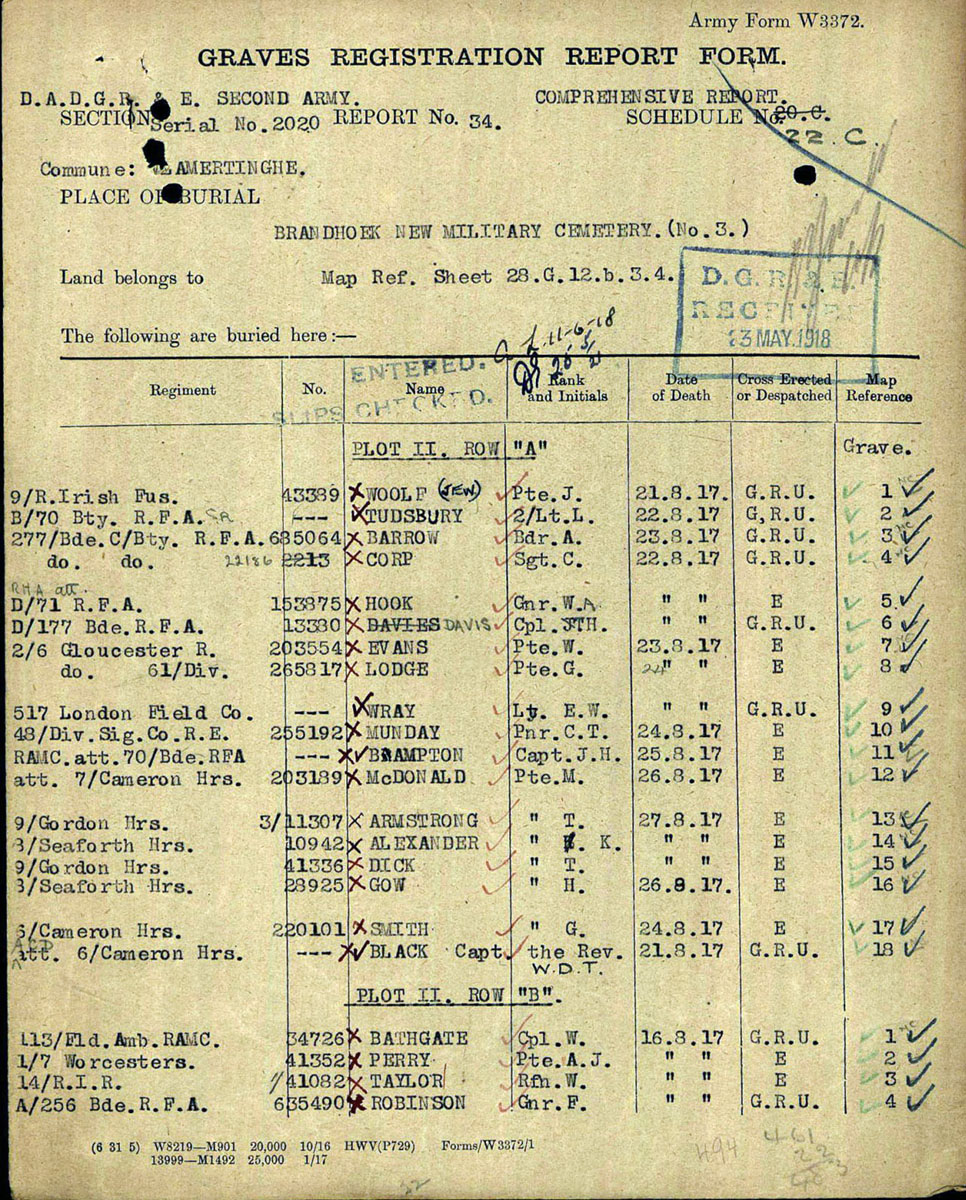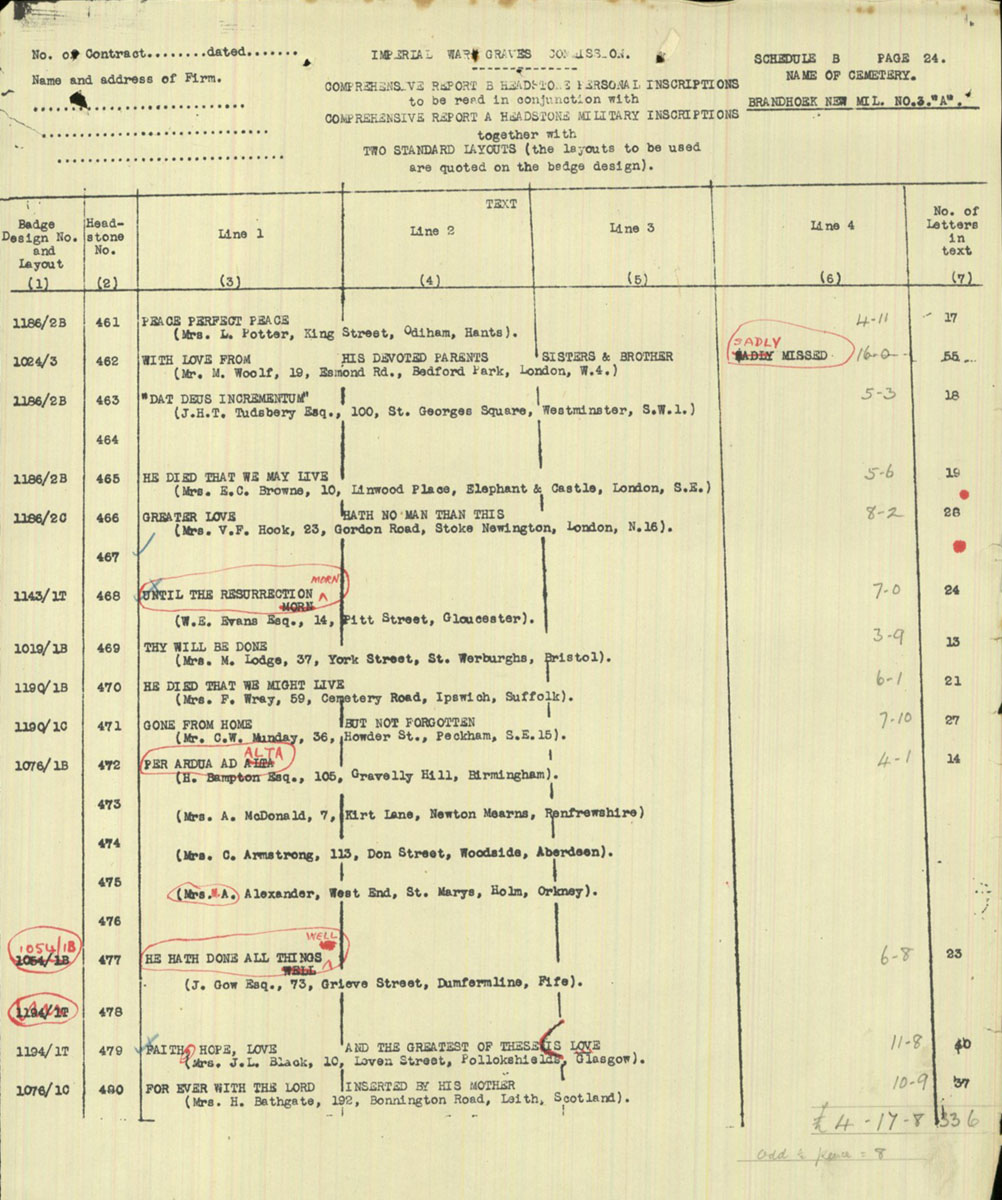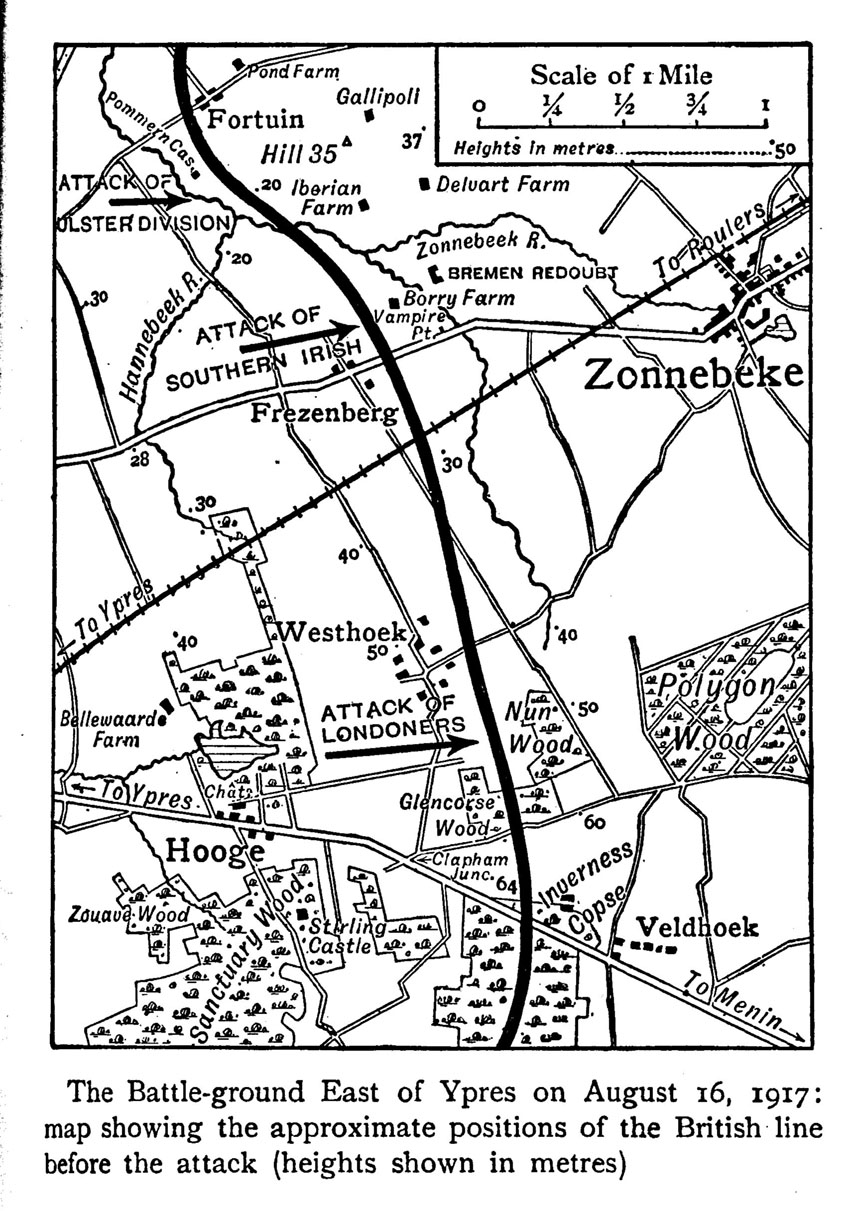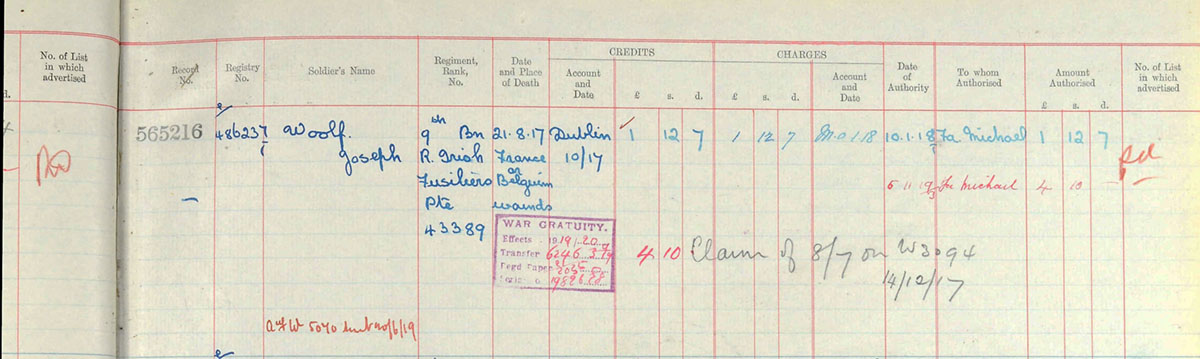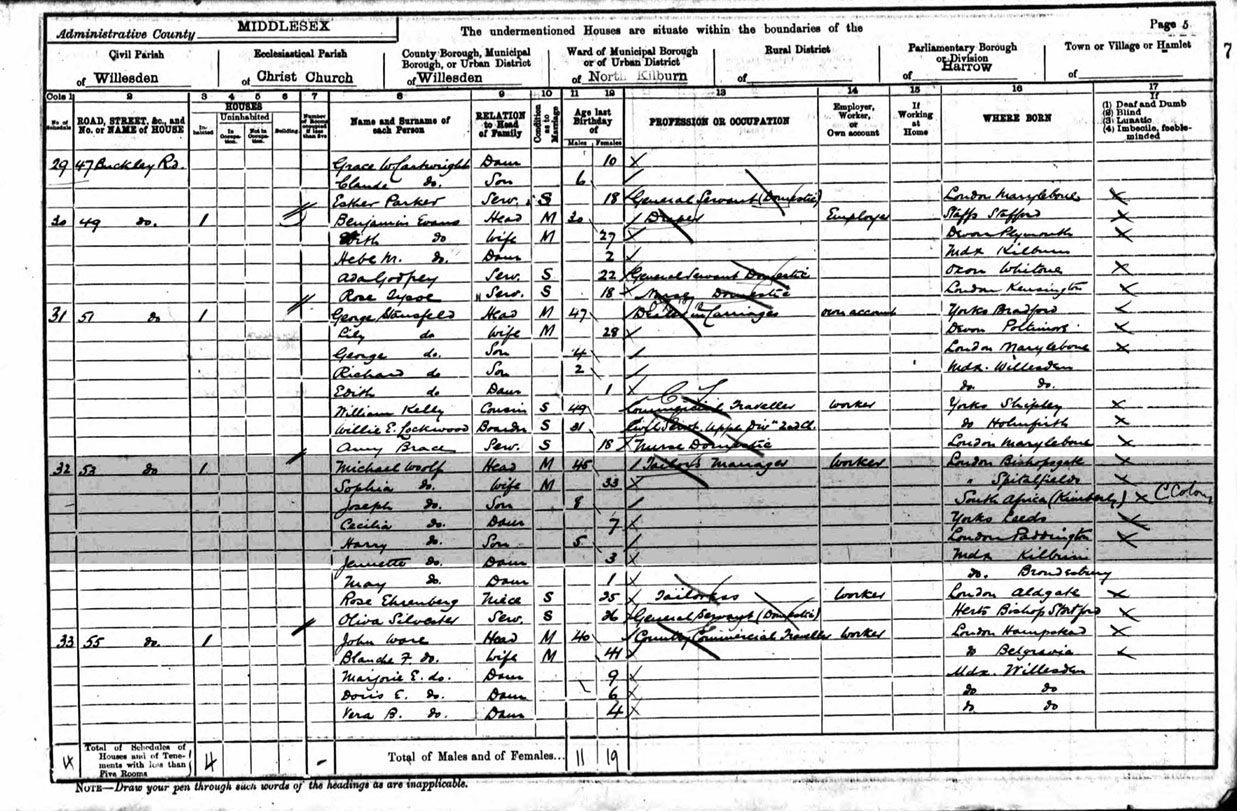


BATTALION WAR DIARY FOR ATTACK ON HILL 35 ON 16 AUGUST 1917
9th (S) Battalion Royal Irish Fusiliers August 1917
 15th August. Pommern Redoubt 15th Transport (with details) moved to H 8 a (central). Bn. HQ moved to Pommern Redoubt at 9.30 pm. Strength 66 officers, 1070 OR. On command 24 O, 286 OR; Rationed: 42 O, 784 OR.
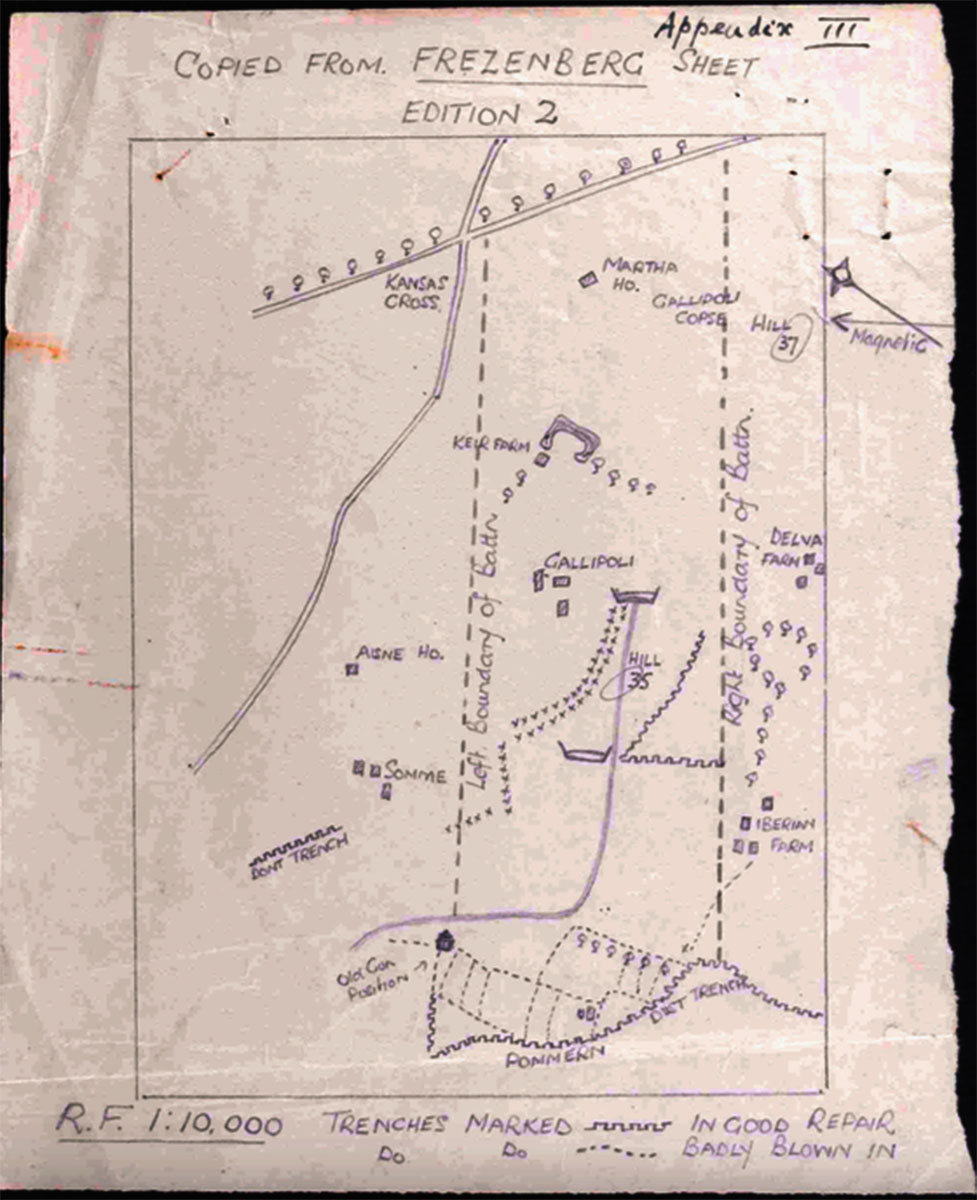
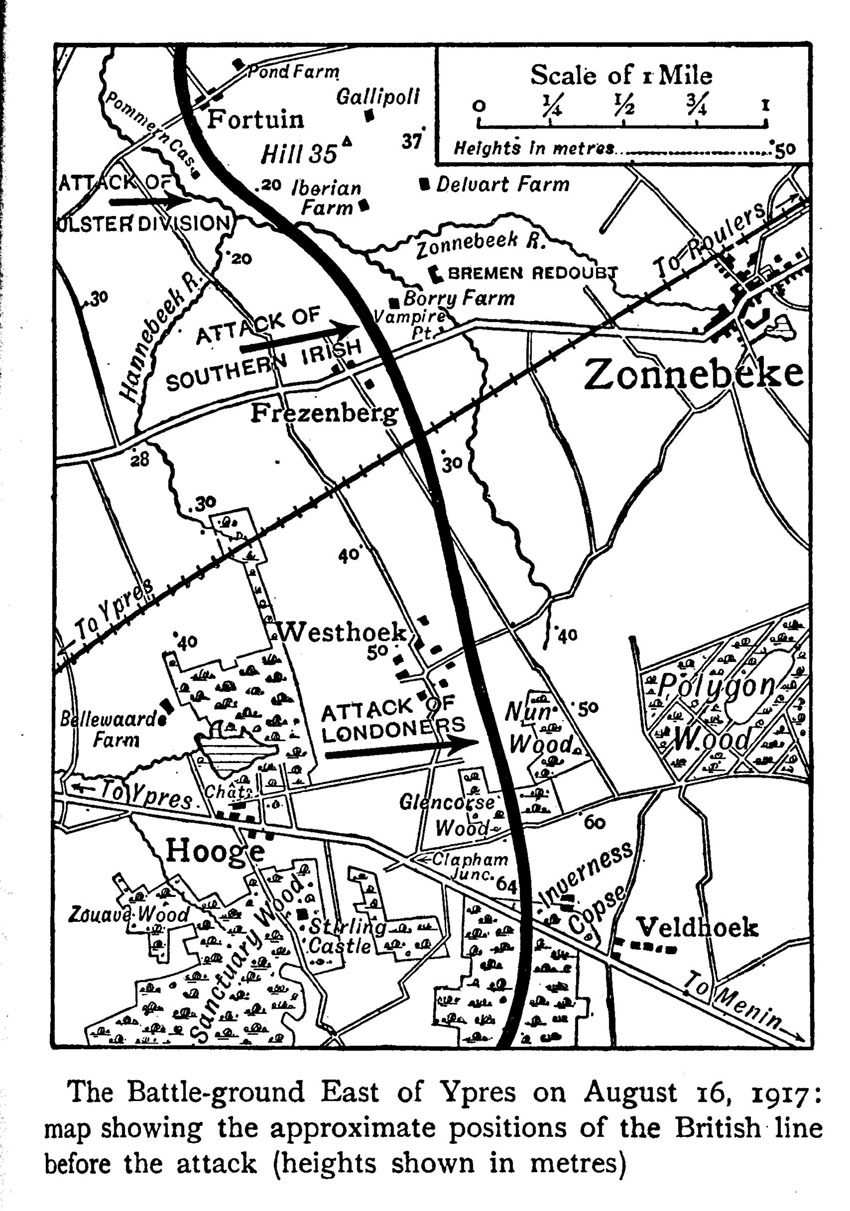
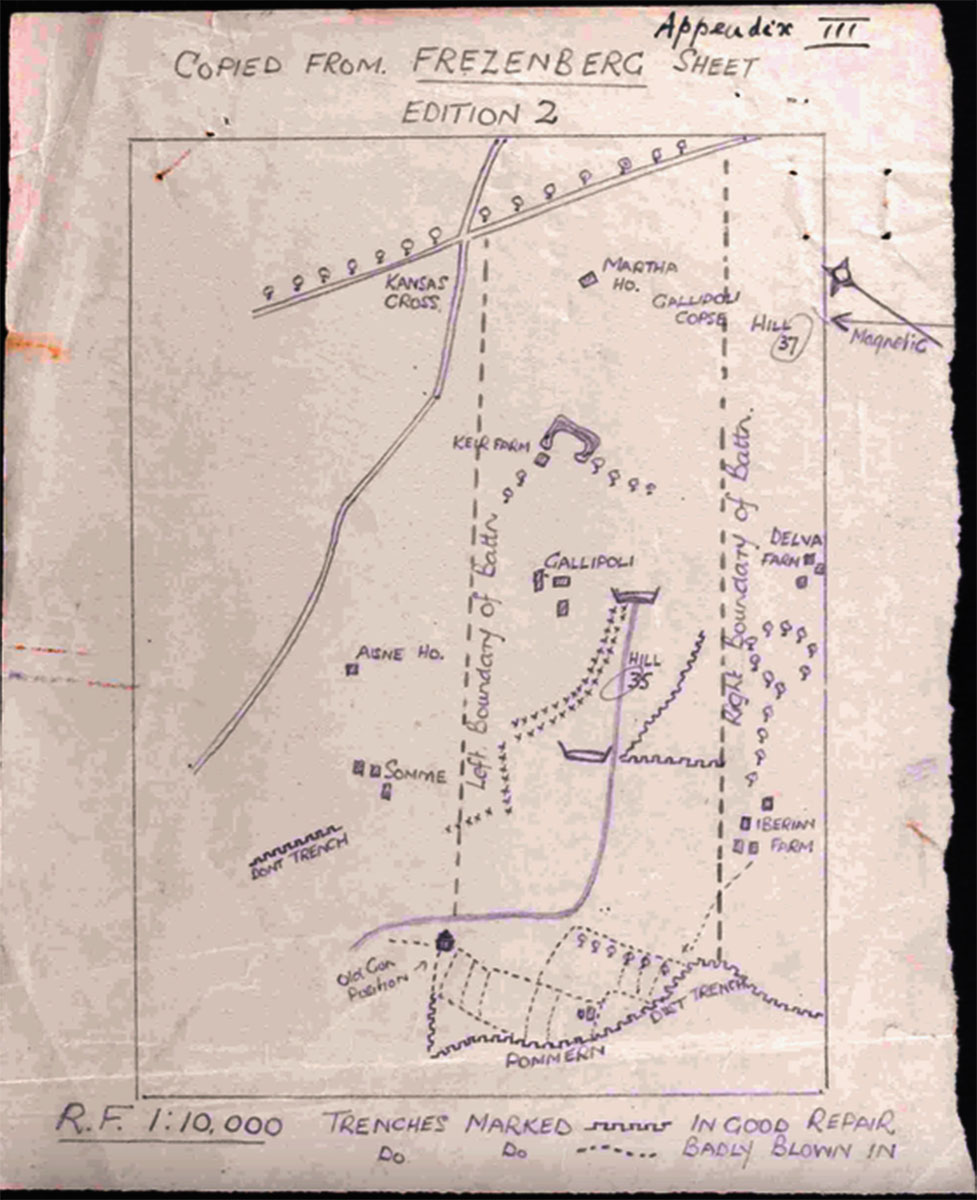
16th August. At zero (4.45 am) the battalion attacked. Our RIGHT FLANK was in touch with LEFT FLANK of 7/8 Royal Irish Fusiliers (16th Division) and rested on old trench running from Pommern Redoubt to IBERIAN FARM. Left of 16th Division also rested on this trench. Left of our battalion was in touch with right of 13th Royal Irish Rifle Brigade at OLD GUN POSITION north of Pommern.
FORMATION The formation adopted by Bn. was: Coys. A & B in front each covering half Bn. front and Coys. C & D in support each covering one of the Coys. in front. each Coy. was formed in two waves, each wave in two lines leaving each Coy. in 4 lines & Bn. in depth of 8 lines extended 5-6 paces, distance between lines of each wave 2 yards, and between waves, 100 yards.
FIRE OPENED Fire was opened at about 50 yard range with rifles, V/Guns and Rifle bombers.
POSITION OF SUCCESSIVE STAGES At zero waves advanced from assembly positions which ran in a northerly direction from point where old trench to IBERIAN joined DUST TRENCH to point beside OLD GUN POSITION – both these points marked with “X” on sketch. The normal position was roughly kept by right attacking and support Coys. until front wave reached a hastily entrenched position S of S.P. on HILL 35 where enemy opened fire on us and each Coy merged its 2 waves into one on account of casualties. Before this trench and S.P. was taken both Coys had merged into one wave. A & C Coys on the right had heavy casualties almost at Zero and merged into 1 wave before they had advanced more than 200 yards.
Strong opposition was met with at S.P. on HILL 35 which held up advance for 20 minutes in which time 7/8 RIF had got ahead of us as had also the barrage. When HILL 35 was taken 1 Platoon was detached to consolidate it and remainder pushed on until centre had reached double row of wire S and E of GALLIPOLI which was only cut in one or two places. This held up the advance. Heavy MG and rifle fire was brought to bear on us from dugouts, in GALLIPOLI and long range MG fire from direction of AISNE HOUSE, MARTHA HOUSE and HILL 37.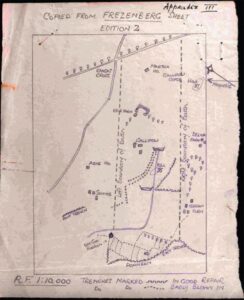 Casualties were very heavy now and it was found impossible to push on and the position outside wire at GALLIPOLI was untenable. So we retired taking up a line along trench running E & W S of HILL 35 and in S.P. on HILL 35. This position was occupied by us with 2 Vickers Guns (108th Bde.) at point marked “X”. These guns wereprotecting left flank of 16th DIVISION which was forward of DELVA FARM. However, long range MG fire from direction of of HILL 37 was enfilading this trench, was not traversed, and causing casualties so we again retired to trench running in a southerly direction from S.P. on HILL 35. This was consolidated and held until 16th DIVISION retired to BLACK LINE and the enemy got on our flank at IBERIAN FARM and again enfolded us. We then retired to BLACK LINE.
NATURE OF GROUND TRAVERSED The ground was very much cut up by shell fire and very heavy to cross.
ARTILLERY SUPPORT was good, but barrage went much too fast.
RESISTANCE This was very stubborn both with MG and rifles, enemy only retired when almost surrounded. Very few allowed themselves to be taken prisoner. They fought practically until every man was killed on HILL 35. Positions were held until our men were right into them.
COUNTER ATTACKS None was launched on our immediate front, but that on 16th DIVISION front was launched in 3 lines with 50 yards distance between them and about 1 yard extension between each man.
Our casualties: Killed 36, wounded 323, shell shock 12, missing 83 missing believed killed 2. Total: 456