


The most decorated soldier commemorated on our memorials, Walter was the youngest son of James Robert Sterndale BENNETT, born 1847, and a grandson of Sir William Sterndale Bennett (1816-1875), one of the most celebrated British composers of the nineteenth century, Professor of Music at Cambridge and latterly Principal of the Royal Academy of Music. James had married Mabel Gaskell in 1876 while Lecturer in Mathematics at King’s, London before becoming Headmaster of Derby School in 1889. They had two daughters and five sons. The second son, also Robert (1880-1963), inherited his grandfather’s skills, becoming the Director of Music at Uppingham School in 1909. He is mentioned by Vera Brittain in Testament of Youth, having taught her brother Edward there. The fourth son James Barry (1889) served as a 2nd.Lieutenant in WW1 in the East Kent Regiment (The Buffs) and survived the war, dying in 1941.
Before the war, the family home was at 13 Mornington Avenue, West Kensington but during the war the parents moved to Barn House, Dymchurch, Kent. For a brief period in late 1916 and early 1917 they also lived at 3 Priory Road, Bedford Park.
Walter Sterndale Bennett was born on 15 Jul 1893 in Derby. In the census of 1901 the family were living at 51 Castletown Road, Fulham, his father having retired. His elder sister, Anne, was then an art student. It is thought that he attended St Paul’s School, Hammersmith. His name is absent in the 1911 Census, but he sailed around the world between 1910 and 1912 from age 17 to 19, indented in the Merchant Navy from 1910, and it seems he will have studied at the Slade School of Fine Art thereafter.
At the outbreak of the War, Walter volunteered with the 28th Battalion, London Regiment – The Artists Rifles. He undertook basic training for 84 days, before transferring to take up a commission with the Royal Naval Voluntary Reserve. His service record confirms was commissioned Sub Lieutenant on 11 February 1915. Appointed to Drake Battalion, Royal Naval Division, he first saw action in Gallipoli from mid-August 1915. He was appointed adjutant to his battalion the following month with the rank of Lieutenant. In April 1916 Sir Charles Monro’s despatch relating to his command of the Middle East Forces mentioned Lt. Bennett for “distinguished and gallant conduct”. This was reported formally in the London Gazette dated 13 July. The battalion was transferred to the Western front in May 1916.
In 1916, the Battalion was before Beaucourt in November 1916, “in the fog and mist of the Ancre Valley” and was actively involved in the Divisional attack and capture of that area. Drake Battalion lost 14 officers and nearly 200 men killed or wounded, including its commanding officer. Walter was awarded his first DSO for his part of the action. The citation states: “For conspicuous gallantry… He assumed command of and handled his Battalion with marked courage and ability. He personally collected a party and bombed the enemy out of part of their second line, where they might have held up the attack”. After this action he was promoted to Lieutenant Commander and was temporarily placed in command of his Battalion.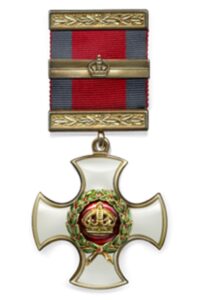 The Bar to his D.S.O., one of only four double D.S.O.s to the Royal Naval Division, was awarded for the successful attack on Gavrelle, East of Arras, on 23/24.4.1917 during the Allied Flanders Spring Offensive. The citation reads: “For conspicuous gallantry and devotion to duty. On discovering the wire uncut except in a few places he went forward himself and led his Battalion through the partially cut gaps. He finally gained his objective and held on against very strong resistance. The success of the operation was almost entirely due to his personal example.” Again, during this action, he was forced to be in command of his battalion after his senior officer had been killed. As such, he held his ground against heavy enemy intrusions and was responsible for large numbers of German casualties.
The rank of Commander followed and he became the youngest Battalion Commander of the War. His report on the battalion’s work in the 36 hours of the engagement is included below.
He remained in command of Drake Battalion, which in late October 1917 moved to the Flanders front at Paschendaele. There, in his headquarters, he was fatally wounded by a fierce enemy bombardment. First-hand accounts describe the course of events: “Commander Bennett was badly wounded at about 4:30 p.m. on November 4th 1917. I was attached to H.Q. at the time and we were caught right in the middle of very fierce bombardment which the enemy had a nasty habit of putting over every evening at the same time… I was about fifty yards away when that particular shell dropped but was fortunately not hit myself although several of my mates were killed.” (Frank Andrews of Drake Battalion). “A shell had struck hirn in the legs, severing one between the knee and ankle and I believe shattering the other foot. Although he received prompt treatment he sank very rapidly. I was greatly surprised and shocked as, when he took over, the line was quiet except for casual shelling”. (Lt.Cmdr. Charles Hayfair, Hawke battalion).
Commander Walter Sterndale Bennett died on 7 November 1917 at 61st. Casualty Clearing Station, Dozinghem, Westvleteren and was buried at Dozinghem Military Cemetery with Full Military Honours. Present were the Divisional General, members of Divisional and Brigade staffs, battalion commanders of 189th Brigade and 15 officers and 120 men representing Drake Battalion. His replacement as battalion commander wrote to his parents: “I do not think I am saying more than the accurate facts when I say that he was universally recognised as the best Commanding Officer in the Division. We shall miss him more than I can say, but his example and training will – I am certain – live in the Battalion for a long time. He was always cheerful and optimistic and absolutely fearless. His men would have gone anywhere and done anything he asked them with the most complete confidence.”
His headstone at Dozinghem reads: “Dearly loved youngest son of JR and MA Sterndale Bennett”. He is also commemorated at SS. Peter and Paul Church, Dymchurch in the Romney Marsh benefice..
THE BATTLE FOR GAVRELLE
This hand-written account by A/Commander Sterndale Bennett of the Drake Battalion’s involvement in the battle for the village appears in Army Book 152. Correspondence Book (Field Service.)
189th Inf Bde. (63rd) R.N. Division 27.4.17
NARRATIVE of OPERATIONS against GAVRELLE-OPPY line and GAVRELLE village.
23rd April. 1917.
11 pm. Patrols reported wire very thick.
1.45 am. B and D Companies in position. 24th April 1917
3 am. Whole Battalion in position in eight waves on a two platoon frontage. This formation was adopted, under instructions from 189th Bde, in order that the frontage might be reduced to make a way through the only gap reported by aircraft. The night was light and the dawn arrived before zero. The men however kept down and were not seen by the enemy. Enemy was shelling the GAVRELLE ARRAS Rd fairly heavily, but we suffered no casualties forming up in the assembly trenches. My H. Q. was then in the British front line.
24th April 1917
3 am. Whole Battalion in position in eight waves on a two platoon frontage. This formation was adopted, under instructions from 189th Bde, in order that the frontage might be reduced to make a way through the only gap reported by aircraft. The night was light and the dawn arrived before zero. The men however kept down and were not seen by the enemy. Enemy was shelling the GAVRELLE ARRAS Rd fairly heavily, but we suffered no casualties forming up in the assembly trenches. My H. Q. was then in the British front line.
ZERO. Barrage opened and men moved forward in fine style.
O hr 3 mins Enemy wire encountered, this wire was terrifically thick and the leading waves became immediately disorganised in their endeavours to find gaps. I then thought it essential to leave H.Q. and try and straighten things out. We managed to get them all through the wire and at Ohr 8mins we assaulted the German front line with great success. B. Coy (the 2nd Coy in the original formation) worked down to the right flank and got rid of any Germans that were causing trouble. The leading Coy. (D Coy) suffered very badly going through the wire from enemy rifle and M. G. fire and all their officers, except the Coy Commander (Sub Lieut Wallis) became casualties. Gave orders to C. Coy (3rd wave) to keep in touch with KRR’s at all costs, which they did very well. Mopping up continued until Ohr 12 mins when we went for the German support line.
We met with little opposition with the exception of small enemy parties which were soon dispersed. The advance continued under excellent leadership by the officers and N.C.O.’s and the way that the men kept close to the barrage absolutely fearlessly was truly magnificent. The YELLOW line was captured at about Ohr 40 mins.
We had an excellent view of the village now and our left flank was engaging enemy M.G s and rifles which were firing from the southern outskirts of the village. The Lewis Guns constantly came into action against enemy parties that were making a stand and were very effective. During this wait on the YELLOW LINE enemy snipers were quite active and Sub Lt. Wallis was hit through the head.
The advance continued and wherever the enemy showed fight, our men made immediate dashes at him and put him out of action or (in a few cases ) sent him back as prisoners. The men’s blood was up and few prisoners were taken. Owing to our having suffered pretty badly in the enemy’s wire the men had little mercy.
In the SUNKEN ROAD there was a considerable enemy garrison. They started to bolt but about 400 of them were reorganised under an officer and at one period it looked rather as if they were going to hold up the KRR.’s (who were not close enough to the barrage) Our advanced parties were ordered to rush up to the SUNKEN ROAD and attack the garrison on their right flank. They did this in excellent style bringing up a Lewis gun and enfilading the road. Those of the enemy that were left gave themselves up and had to run the gauntlet through our men as they ran back to the rear. The same Lewis gun took up a position on the eastern side of the road and played on the remainder of the garrison which was doubling towards SQUARE WOOD. Word was sent to the KR.R.’s that their position was taken and they could come up when they thought fit.
When the remainder of the Bn came up we immediately pushed out our Lewis guns on to the high ground to the east of the road and gave our men a short rest. During this period many more of the enemy were cleared out of the small shelters in the SUNKEN ROAD and enemy tools were being collected. I then went out to site my trenches and expected to see the Nelson Bn. coming out of the village on my left but they did not show up. So I decided to dig my line using an enemy communication trench for my general alignment. Keeping the men as much as possible off the road, they started to dig in .
I saw a small party of the Nelson Bn digging in about C.25.a. 6. 1. So I decided to make towards this on my left flank and the cross roads C.25 c.9. 1. I decided this was my right flank as I was here in touch with 2 Cmy’s of the K.R.R.’s.
I had a splendid view of the valley ahead to FRESNES les MONTAUBAN and I felt that, as my flanks were doubtful, I could not do better than dig in where I was. The enemy M. G’s from about C. 19 D 3.3 and C. 19 D 9.4. were giving us a lively time but we managed to rush out to shell holes on our right flank to the east of the road and the consolidation went on very successfully.
The enemy then started to shell the road with 5.9’s and I sent back for retaliation on FRESNES les MONTAUBAN on the OPPY gun line.
The enemy during our consolidation was coming back in small parties and occupying trenches in the valley and some small areas of dead ground about 300 yards from our position. I received no fire except for occasional sniping owing to the lack of SAA.
During the afternoon a very formidable body of the enemy started to advance towards us in waves on a line stretching from about C.20 central to SQUARE WOOD. The number must have amounted to two brigades. I sent back immediately for the barrage to reopen. This was done and the enemy became thoroughly disorganised and on the left flank they started to retire along the road. However small parties kept advancing and occupying the trenches to the NE of the village and also the dead ground 300 yards in front of my position. They were evidently determined to drive us out if possible and I kept up my consolidation at top pressure. I sent back for information regarding my flanks and for Small Arms Ammunition and bombs.
I kept my H.Q. in the firing line because from there I could see the enemy’s movements. As soon as SAA arrived we kept up a steady fire at the enemy as he approached us in small parties, I got news of my flanks from the Brigade and felt more confident of my position. My right flank however was still doubtful as we only had two Coy’s of the K.R.R.’s between us and an enemy strong point. This strong point was causing considerable trouble to the K.R.R.’s by enfilade fire along the SUNKEN ROAD. I got into communication with the K.R.R.’s and was informed that this gap was going to be made good by the 13th R. Fusiliers during the night.
The enemy kept coming on in driblets all afternoon and I expected a counter-attack during the night. I sent my Lewis gun officer to select good sites for my Lewis guns keeping two guns on each flank. My two Stoke guns were dug in just behind the SUNKEN ROAD also protecting my flanks.
25th April
During the Stand to at night I reinforced my posts in flank by sending out five Lewis Guns about 100 yards in front of my position. Early morning “minnies ” started to shell the village with great vigour from the enemy trenches to the N.E, The NELSON Battalion sent up an S.O.S. signal and I sent back to get the heavies – giving the co-ordinates. The heavies opened up another barrage. This quietened down the “minnies” but the 5.9’s were very active. These 5.9’s during the whole time we were up in the line caused considerable annoyance and I constantly sent back for retaliation. In some cases this retaliation had a good effect.
During the morning still more parties of the enemy were constantly pushing forward opposite my front and we fired on them continually when we could afford the ammunition. They brought up M.G’s and started to sweep our parapets Our M. G. took up a position about 1. 1.b. 6.9. and played along the road, making communication between ourselves and the K.R.R.’s extremely difficult.
During the afternoon 20 of the enemy again appeared on the ridge to the N.E. of the village about 1000 yards away. I estimated his strength at about four battalions and, as he was shelling the village with heavies for about six hours and was putting up an intensive barrage he evidently meant to attack the N.E. corner of the village – the most vulnerable place. The corner (MAYOR’s HOUSE) was held by a platoon of NELSONS and 1 Lewis Gun. I saw the house hit by one or two 5-9’s and I saw the garrison retire. When the enemy barrage lifted I sent down to the HOWE Company Commander, who was holding a line along the western edge of the cemetery to occupy the MAYORs HOUSE at once, and sweep the ridge with a Lewis Gun in order to keep down enemy M. G.’s that were enfilading our trench. 1 sent back a message to my liaison officer to get the artillery on to the enemy on the Ridge. Just as the last wave was appearing over the ridge the artillery crashed amongst them in great style. It was a glorious sight. The enemy however were fine troops – much finer than those of the previous day – and they kept coming on by occupying shell holes and small trenches. Our Lewis Guns and rifles on the left flank played havoc with these parties and were keeping up a steady well controlled fire which mowed down the enemy. I thought that probably the enemy troops who were just in front were waiting for those on my left flank to get up into line before advancing. Just as the enemy was getting up into line I sent up my S. 0. S. and the barrage came down on those in front of my position. They held on and suffered badly from this barrage. Any that moved were mowed down by my men.
The landscape now was fairly clear except for stretcher parties. The sniping however went on until dark and the constant rifle and Lewis Gun firing accounted for considerable quantities of the enemy. They were congregated in the trenches to the N.E. of the village and I warned the brigade to keep up a steady fire with the heavies round this corner. I thought that if they rushed this corner, the positions of both brigades would be seriously imperilled.
During the night I heard very heavy rifle fire going on on my left near the Ridge and also had a report from the K.R.R.’s that the enemy was moving forward in front of them. I had previously agreed with the C.O. of the K.R.R.’s that I would support him with the artillery in front of me, so I did not hesitate. I sent up my last S. 0 S and the barrage opened on the enemy immediately in front of my position. I thought perhaps the rifle fire on my left was the enemy advancing, firing from the hip, and as the enemy garrison in front of me was strong, I felt justified in asking for one more barrage. They could have rushed us with comparative case as the men had little or no sleep since the 21st and were thoroughly exhausted with the constant vigil and consolidation.
During the massing I asked for a few reinforcements but the artillery being so effective – when the reinforcements arrived they were not needed. When the final counter attack was broken I asked for shelling along the ARRAS GAVRELLE-FRESNES ROAD if the shells could be spared. This arrived and caught many large parties of the enemy along this road.
I feel that I am not exaggerating when I estimate the enemy’s casualties at two thousand. We were firing at them continually all the time we were up there – the fire was well controlled and splendid effects were seen – The artillery was magnificent. The enemy was thoroughly butchered and we enjoyed every moment of it all.
W. Sterndale Bennett. Act. Commander
Commanding Drake Bt. November 1917


